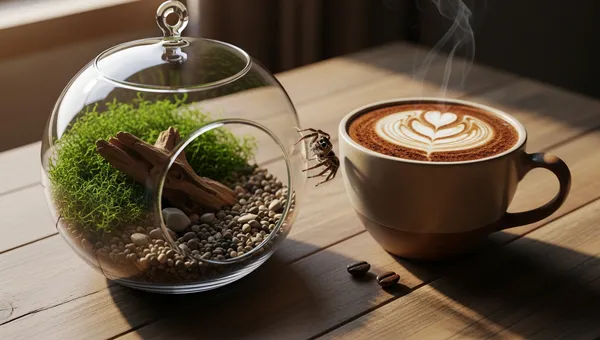
Invertebrate pets for beginners come in more shapes than most people expect. Maybe you saw a jumping spider lock eyes with a camera on social media and immediately wanted one. Maybe a friend’s isopod terrarium looked like a tiny, self-sustaining world and you were curious. Maybe a praying mantis turned its head to look at you and that was it. Whatever brought you here: welcome. Invertebrate keeping is one of the most accessible, affordable, and rewarding corners of the pet hobby, and most beginners seriously underestimate how interesting it can be.
This guide does two things most beginner lists skip. First, it tells you which invertebrates are genuinely easy to start with and why. Second, it names the popular species that get oversold as beginner pets when they actually require experience to keep well. You deserve that honesty before you spend any money.
Key Takeaways
- An invertebrate is any animal without a backbone: a group covering over 95% of all animal species on Earth, including spiders, insects, and crustaceans.
- The three most genuinely beginner-friendly choices are jumping spiders, isopods, and stick insects.
- Jumping spiders are the only option on this list that actively watches you back and can be handled from a young age.
- Isopods are the lowest-maintenance invertebrate pet: a self-sustaining colony you check on for roughly ten minutes a week.
- Praying mantises are popular on social media but are not recommended for first-timers; molting humidity requirements are unforgiving and early deaths are common.
- Tarantulas are regularly marketed as beginner-friendly but present real risks new keepers are not warned about.
- Startup cost for the three recommended species runs $30–$120 for a complete setup.
- Read the care guide before you buy, not after. Every species here has warning signs worth knowing in advance.
What is the best invertebrate pet for beginners? (featured snippet)
For hands-on interaction, captive-bred jumping spiders (Phidippus regius) are the best invertebrate pet for beginners: diurnal, compact, handleable, and forgiving of minor care mistakes. For lowest time commitment, isopods win: a self-sustaining colony needing roughly 10 minutes per week. Stick insects are the best option for those who want something unusual with no live prey required.
What is an invertebrate?
An invertebrate is any animal that does not have a backbone. That places fish, frogs, lizards, birds, and mammals in the vertebrate camp, leaving everything else as invertebrates: insects, spiders, crustaceans, worms, snails, and far more. Invertebrates make up more than 95% of all known animal species on Earth, according to the Smithsonian Institution.
For pet keeping purposes, the invertebrates you will encounter fall into a few main groups:
- Arachnids: animals with eight legs, including spiders, scorpions, and mites. Jumping spiders and tarantulas belong here.
- Insects: six legs, three body segments (head, thorax, abdomen). Praying mantises, stick insects, and Madagascar hissing cockroaches are insects.
- Crustaceans: a group most people associate with crabs and lobsters, but which also includes the woodlouse. Isopods are land-dwelling crustaceans that breathe through gill-like structures on their underside. Unlike the others in this guide, they eat no live prey at all.
- Myriapods: the many-legged group, including millipedes and centipedes.
You do not need to memorize any of this. But knowing these groupings helps when you search for care information, because husbandry resources are typically organized by animal class.
What makes an invertebrate beginner-friendly?
Five factors determine whether a species is genuinely easy or just marketed as easy:
- Forgiving of small care mistakes. A first-time keeper will get things slightly wrong. A beginner species tolerates minor humidity or temperature deviations without a health crisis.
- Manageable feeding. Flightless fruit flies and isopod diets are far easier than sourcing and storing appropriately-sized live crickets for a mantis nymph.
- Low escape risk. Some invertebrates are accomplished escape artists. This matters more in a household with other pets.
- Visible and active during the day. A pet you can only observe at 2 a.m. offers limited engagement.
- Reasonable startup cost. Sub-$120 for a complete first setup is the realistic bar for a beginner who is not yet committed long-term.
Every recommendation below scores well on all five. The “not-for-beginners” species later in this guide fail on at least two.
The honest comparison table
This table compares five commonly recommended species across the dimensions that matter most for a first-time keeper. Costs are approximate for a single animal plus a basic enclosure.
| Species | Difficulty | Space | Time per week | Cost to start | Lifespan |
|---|---|---|---|---|---|
| Jumping spider (Phidippus regius) | Easy | Small (20 × 20 × 30 cm) | ~15 min | $50–$120 | 1.5–3 yrs (female) |
| Isopods (Porcellio scaber or Armadillidium vulgare) | Very easy | Small (shoebox-size works) | ~10 min | $30–$60 | Colony lives indefinitely |
| Stick insect (Indian stick insect) | Easy–Moderate | Medium (tall mesh enclosure) | ~20 min | $20–$50 | 1–2 yrs |
| Praying mantis | Moderate–Hard | Small but precise humidity | ~30 min + daily checks | $40–$80 | 6–12 months |
| Millipede (Narceus americanus or similar) | Easy | Medium (deep substrate tub) | ~15 min | $30–$70 | 5–10 yrs |
The table gives you numbers. The sections below give you the full picture.
Recommendation 1: Jumping spiders
Start here if you want a pet that watches you back, can be handled, and has a recognizable personality.
Jumping spiders are the fastest-growing segment of the invertebrate pet hobby. The attention is deserved.
Why they work for beginners:
Jumping spiders are diurnal (active during the day), which means you actually see what you are keeping. They have the most acute vision of any spider, courtesy of four large forward-facing eyes that track your movements and seem to recognize individual keepers over time. They are compact: an adult Phidippus regius female needs an enclosure roughly 20 × 20 × 30 cm. That fits on a desk.
Their care margin is forgiving. Room temperature (22–26°C) is usually fine without supplemental heating. Feeding once every 3–5 days suits a busy schedule. Missing a misting by a day is not a crisis. And startup cost is genuinely accessible: a full setup with enclosure, décor, substrate, and a first batch of feeders runs $50–$120.
The best first jumping spider is a captive-bred adult or sub-adult Phidippus regius female. Females live longest, commonly 18–30 months, accept a wide range of feeder insects, and show the bold, curious personality the species is known for.
One point on handling: jumping spiders can be handled, but on their terms. Place a hand near the open enclosure and wait. Most individuals walk onto a hand voluntarily after a few sessions. Never grab or chase.
Want to go deeper? The jumping spider care guide covers setup, feeding, molting, and warning signs worth knowing before your first spider arrives. Still deciding? Are jumping spiders good pets? answers the question directly.
Recommendation 2: Isopods
Start here if you want a low-pressure, set-it-and-observe-it terrarium that largely runs itself.
Isopods are crustaceans, not insects or spiders. They are land-dwelling relatives of the crab. Most people know them as woodlice, pill bugs, or roly-polies. In the invertebrate hobby they are celebrated both as fascinating pets in their own right and as the backbone of bioactive terrariums, where they break down waste and cycle nutrients.
Why they work for beginners:
They require no live prey at all. They eat decaying leaf litter, rotting wood, cuttlebone (for calcium), and occasional supplemental foods like sliced vegetables. A colony is self-sustaining: once established, a healthy group breeds on its own, and you naturally replace losses without rebuying. Beginner species like Porcellio scaber and Armadillidium vulgare tolerate a range of temperatures and humidity variations that would stress more sensitive invertebrates.
An enclosure can be as simple as a ventilated plastic box: no special lighting, no heating required for most common species, no live prey logistics. Time commitment is genuinely minimal: mist one half of the enclosure every few days, add food once a week, and observe freely.
The one thing to know: isopods breathe through gill-like structures on their underside, so humidity matters. The standard approach is keeping one half of the enclosure moist and one half dry, letting the colony move between zones to self-regulate.
Common starter species: Porcellio scaber (rough woodlouse), Armadillidium vulgare (pill bug, rolls into a ball when disturbed), and Cubaris murina (panda isopod). All are available from hobby sellers for $5–$20 per starter group of 10–20 individuals.
Want the full picture? See the isopod care guide for substrate recipes, feeding schedules, and how to tell if your colony is thriving. Wondering if they are the right pet? Are isopods good pets? walks through the honest pros and cons.
Recommendation 3: Stick insects
Start here if you want something unusual, hands-off, and genuinely cheap to start, and you do not want to deal with live prey.
The Indian stick insect (Carausius morosus) is the classic beginner insect, widely used in school settings for decades precisely because it asks so little. Adults reach around 8 cm and look almost exactly like a stick. That camouflage is not a flaw: watching an animal that has evolved to disappear is genuinely fascinating.
Why they work for beginners:
They eat fresh bramble (blackberry), privet, or ivy. All are widely available, and free if you can forage them from a garden. No live prey, no feeder insects, no hunting behavior to manage. They are calm and slow-moving, making handling straightforward. Indian stick insects are also parthenogenetic: females reproduce without males, so a single female will eventually lay eggs that hatch naturally.
What to watch: stick insects are accomplished escape artists. Their slim profile means any gap in a lid is an invitation. The enclosure needs to be a tall mesh cage (at least 3 times the animal’s body length in height) and fully secured. Fresh food needs replacing every 2–3 days to prevent mold.
Stick insects are among the cheapest pets available. A pair often costs $5–$10, and the enclosure is the main expense.
The honest “not for beginners” section
These species are popular, widely marketed, and look achievable. Some are excellent pets with experience behind you. For a first-time keeper, they create an unnecessarily hard start.
Praying mantises
Praying mantises are visually striking and all over invertebrate keeping social media. They also have one care demand that trips beginners regularly: molting humidity requirements.
A mantis molts multiple times as it grows, and each molt requires precise ambient humidity. Too low, and the old exoskeleton adheres during the shed (called a mismolt), which is one of the leading causes of death in captive mantises. Misting needs during molting can range from once every other day to three times daily depending on the season, the individual, and the enclosure style. Getting this wrong at night when you are not watching is common.
Additionally, many online sellers list mantises at their earliest nymph stages (first and second instar), which are the cheapest to buy and also the hardest to keep alive even for experienced keepers.
The bottom line: if a praying mantis is what called you to this hobby, that is worth honoring. Read the praying mantis care guide carefully, spend one season with a jumping spider or an isopod colony first, and come back. The mantis will be a much better experience when you have the baseline knowledge.
Tarantulas
Tarantulas get described as “low-maintenance beginner pets” by many retailers. This is true in one narrow way: established adult tarantulas eat infrequently and can go long stretches without attention. What this understates:
Urticating hairs. Most New World tarantula species (the ones marketed to beginners) can flick hairs from their abdomen when startled. These hairs cause skin irritation and serious problems if they reach eyes or mucous membranes.
Molting vulnerability. A tarantula on its back mid-molt appears dead. Many beginners panic and interfere, which is fatal. The instinct to “help” a molting tarantula is nearly universal and nearly always wrong.
Slings. Juvenile tarantulas (slings) are sold cheaply and are among the hardest life stages to keep. They are the animals you are most likely to encounter at the low end of the price range.
A beginner starting with a tarantula faces a steeper learning curve than the marketing implies, with less margin for the inevitable early mistakes.
What about millipedes?
Common species like Narceus americanus (the American giant millipede) are hardy and long-lived, up to 10 years. They eat decaying organic matter and are low-maintenance. Two caveats: they produce mildly irritating defensive secretions when stressed (wash hands after handling), and they are mostly nocturnal and burrowing, so you will not see much of them during the day. They make an excellent second or third invertebrate rather than a first.
How to choose the right first invertebrate
Three questions point clearly to the right answer:
Do you want to interact with it? If yes, you want a jumping spider. They are the only species on this list that actively engages with their keeper.
Do you want the lowest possible time commitment? If yes, isopods. Ten minutes a week, observe as much or as little as you like, and the colony takes care of itself.
Do you want something unusual that does not require live prey? If yes, stick insects. Cheap to start, calm, and genuinely interesting to observe.
If your answer is “I saw a mantis and that is what I want,” that is a completely valid goal. Park it, spend one season with a jumping spider or an isopod colony, and come back to mantises with the knowledge you will have by then. You will not regret the detour.
Frequently Asked Questions
What is the easiest invertebrate pet for beginners?
Isopods (Porcellio scaber or Armadillidium vulgare) are the easiest invertebrate pets for most beginners. They need no live prey, tolerate a range of conditions, and self-sustain once established. For those who want a single interactive pet, a captive-bred adult female Phidippus regius jumping spider is the easiest species that offers genuine daily engagement.
Can invertebrate pets be handled?
Some can. Jumping spiders (Phidippus regius) are the most handleable beginner species; most individuals walk onto a keeper’s hand voluntarily with a little patience. Stick insects and millipedes tolerate gentle handling. Isopods can be handled but are small and quick. Tarantulas can be handled by experienced keepers; they are not recommended for beginners to attempt. Praying mantises can be handled, but their sharp forelegs can scratch skin and they respond poorly to sudden movements.
How much does it cost to start keeping invertebrates?
A complete beginner setup (enclosure, substrate, décor, and the first animal) typically runs $30–$120 depending on species. Isopods and stick insects sit at the lower end. Jumping spiders sit in the middle. Ongoing costs are low: feeder insects for a jumping spider run roughly $10–$15 per month for a single adult.
Is it legal to keep invertebrate pets?
In most countries, common pet invertebrates like jumping spiders, isopods, and stick insects are legal to keep without permits. Some stick insect and mantis species are regulated in certain US states. Always check your local regulations before purchasing; reputable sellers will flag any restrictions upfront.
Do invertebrate pets feel pain?
This is a genuinely debated question in animal behavior research. The current scientific consensus is that invertebrates likely experience nociception (a response to harmful stimuli) but whether they experience subjective pain the way vertebrates do remains unclear. Most experienced keepers err on the side of minimizing stress: handling gently, avoiding unnecessary disturbance, and ensuring welfare needs (temperature, humidity, appropriate prey sizing) are met.
Which invertebrate pets are best for kids?
Isopods are the most practical choice for younger children: no live prey handling, no bite risk, and the colony is forgiving of days without attention. Stick insects are a close second. Jumping spiders are manageable for older children (8 and up) who can follow handling guidelines. Praying mantises and tarantulas are not recommended for children.
Where to go next
Read the care guide for your chosen species before you buy. Every animal here has different humidity needs, feeding schedules, and warning signs worth knowing in advance.
- Jumping spiders: Jumping spider care guide · Are jumping spiders good pets? · How much does a jumping spider cost?
- Isopods: Isopod care guide · Are isopods good pets?
- Praying mantises (when you are ready): Praying mantis care guide
Pick one animal, read its guide, and get started. Every experienced keeper was exactly where you are right now.
Species difficulty ratings and care information reflect the current consensus among experienced hobby keepers and published invertebrate husbandry resources. For health concerns with any invertebrate pet, consult a qualified exotic veterinarian.